We’ve all met that stain. The ring in the bath that won’t budge, the greying sink, or the tile grime that a quick wipe just smears around. When your usual spray gives up, scouring powder is often what finishes the job.
So, what is scouring powder used for? In short, it’s a mildly abrasive cleaner that scrubs away stubborn, ground-in dirt from hard surfaces. Soapreme Scouring Powder is made to power through stains and restore sparkle in the kitchen and bathroom without scratching. By the end of this article you’ll know:
- Which surfaces scouring powder cleans best
- Where you should never use it
- How to use it step by step
- How it compares to cream cleanser
Soapreme manufactures and distributes cleaning products across South Africa, so these tips come from people who know cleaning products well.
How Scouring Powder Works
Scouring powder combines a cleaning agent with fine abrasive particles. When you rub it on a wet surface, those particles lift stains and baked-on grime that sprays and wipes leave behind. Think of it as a deep clean for tough spots, not an everyday spray.
Where to Use Scouring Powder
Scouring powder works best on hard, sturdy surfaces that can handle some scrubbing:
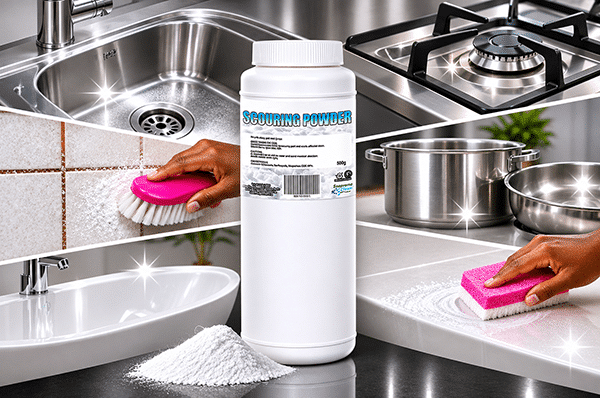
- Kitchen sinks: Removes tea and coffee stains and the grey film that builds up over time.
- Baths and basins: Lifts soap scum and tide marks.
- Toilets: Scrubs stains inside the bowl.
- Tiles: Cleans grimy floor and wall tiles and the lines between them.
- Countertops: Handles stubborn marks on hard, durable worktops.
- Pots, pans and baking trays: Removes charred food, carbon buildup and black char stains.
- Stove tops and gas cookers: Cuts through baked-on grease and splatters. Use gently on smooth glass cooktops to avoid scratching.
Where Not to Use Scouring Powder
Because it’s abrasive, scouring powder isn’t right for every surface. Avoid it on:
- Non-stick pots and pans, which can be scratched and damaged
- Polished, glossy or high-shine finishes, which can turn dull
- Acrylic or fibreglass baths, which scratch easily
- Chrome taps and fittings, which can lose their shine
- Glass, mirrors and glass-ceramic hobs
- Painted surfaces and wood
- Natural stone such as marble, which can be marked or dulled
If you’re unsure, test a small, hidden spot first. Brushed stainless steel needs extra care too, so rub gently in the direction of the grain.
How to Use Scouring Powder
- Wet the surface or a damp sponge first.
- Sprinkle a small amount of powder on the sponge or directly on the stain.
- Rub gently in small circles. Let the powder do the work rather than pressing hard.
- Leave it for a minute or two on stubborn stains.
- Rinse thoroughly with clean water until no gritty residue remains.
Wear gloves if you have sensitive skin, and keep the pack closed and dry in a cool place, away from children and pets.
Scouring Powder vs Cream Cleanser
Both clean bathrooms and kitchens, but they suit different jobs.
| Scouring powder | Cream cleanser | |
| Best for | Tough, ground-in stains | Light to medium grime |
| Feel | Gritty and more abrasive | Smooth and gentler |
| Rinsing | Needs thorough rinsing | Rinses off more easily |
| Surfaces | Sturdy, hard surfaces | A wider range, including more delicate ones |
| Good for | Sinks, tiles, toilets | Regular upkeep of baths and basins |
A simple rule is to use cream cleanser for regular upkeep, and bring in scouring powder when a stain refuses to move.
Get Scouring Powder from Soapreme
Ready to tackle those stubborn stains? Soapreme Scouring Powder comes in 500 g and 25 kg packs, so you can choose the right size for your home or a bigger cleaning job.
Not sure if it suits a particular surface? Contact the Soapreme team and we’ll point you in the right direction. Business customers can also ask about delivery, which is available for business orders with minimum order values.